
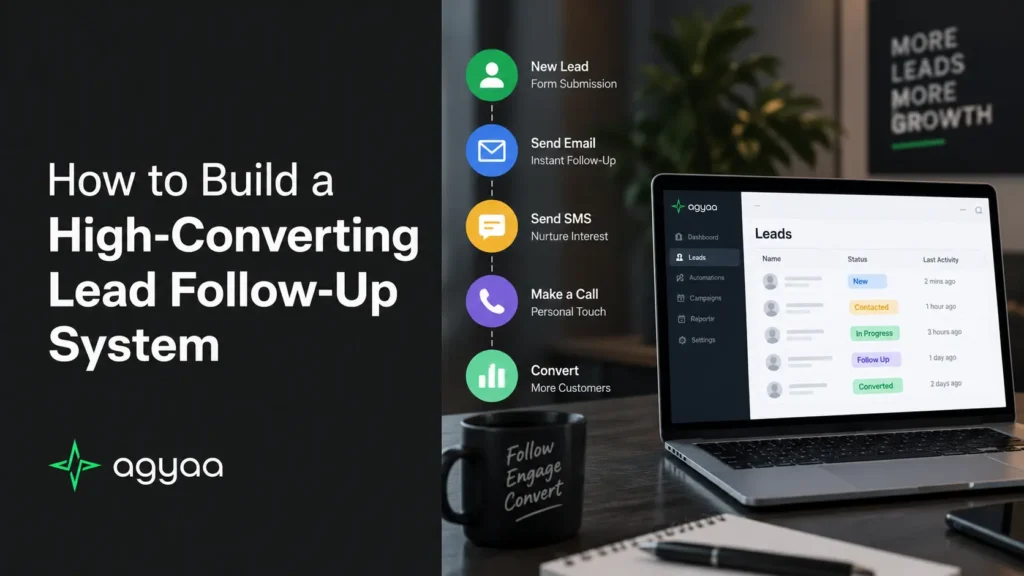
Most businesses don’t have a lead generation problem—they have a lead response problem. Every day, companies spend thousands of dollars driving high-intent prospects to forms, booking links, and landing pages, only to let those leads go cold in an unmonitored CRM.
According to lead response research, contacting a prospect within 5 minutes makes you 21 times more likely to qualify them compared to waiting 30 minutes. Yet, the average business takes over 40 hours to make first contact—and more than half of all leads never receive a response at all.
Building a high-converting lead follow-up system is about bridging this gap. It replaces manual, reactive sales tactics with a reliable architecture that captures, qualifies, and converts prospects on autopilot.
Let’s break down how modern businesses are building these systems to maximize ROI and convert more leads into paying customers.
Speed Over Size: Why Instant Response Wins
Large enterprise companies often take days or weeks to move a lead through complex qualification layers, manual approvals, and legacy CRM workflows. Nimble businesses, on the other hand, can set up automated follow-up workflows that respond within seconds.
For example, implementing automated workflows for customer support or lead qualification doesn’t require a massive IT team anymore. With plug-and-play platforms, even a small sales team can automate messages, make call attempts, and capture leads 24/7.
This speed allows businesses to:
- Respond to customer inquiries instantly before competitors do
- Reduce missed revenue opportunities from dropped leads
- Scale customer acquisition without exponentially increasing headcount
The Core Infrastructure: Ingestion & Qualification
A follow-up system fails instantly if leads sit in a disconnected inbox or spreadsheet. High-converting setups prioritize instantaneous lead capture and immediate data enrichment.
Zero-Latency Lead Ingestion
To achieve sub-5-minute response times, your web forms, ad platforms (Meta, Google, LinkedIn), and chat widgets must connect to your core CRM via webhooks or direct integrations.
Using real-time event triggers (webhooks) eliminates batch-sync polling delays, ensuring the moment a lead hits “Submit,” your follow-up system springs into action.
Automated Lead Scoring & Tiering
Not all leads deserve equal effort. Routing every lead directly to a high-touch sales call burns out reps and lowers response speed for high-intent prospects. Implementing automated lead scoring helps categorize prospects into clear buckets:
- Tier 1 (VIP Priority): High intent and high fit. Triggers immediate automated calls, priority rep routing, and instant SMS alerts.
- Tier 2 (Fast Track): High intent but lower company fit. Directs the lead to self-serve meeting links and automated sequences.
- Tier 3 (Slow Burn): Low intent or early-stage inquiries. Enrolls prospects in educational drip campaigns until engagement scores rise.
Multi-Channel Follow-Up Cadence
Relying on a single communication channel leaves sales to chance. Modern prospects filter cold calls, ignore unread emails, and overlook social DMs. A high-converting system orchestrates email, SMS, phone calls, and LinkedIn outreach into a cohesive cadence.
Here is a proven multi-channel approach for inbound prospects:
Day 1: The Instant Touch (Minutes 0–5)
- Instant Confirmation: An automated SMS or email goes out immediately, confirming their inquiry and offering a direct booking link.
- Rapid Phone Call: For high-priority leads, an automated trigger alerts a sales rep or AI agent to place a call within 5 minutes.
Days 2–3: Value-First Follow-Up
- Email: Send a relevant case study or video breakdown that directly addresses the prospect’s core challenge.
- LinkedIn: A soft connection request without an aggressive sales pitch keeps your brand top of mind on social channels.
Days 5–7: Low-Friction Check-Ins
- SMS: A short, conversational text question (e.g., “Did you get a chance to check out that case study?”) often yields higher response rates than formal emails.
- Email: Share a practical framework, guide, or tool related to their problem.
Day 14: Closing the Loop
- Breakup Email: Send a polite “closing the loop” message. Counterintuitively, letting prospects know you are closing their file often triggers loss-aversion responses from those who were simply busy.
Marketing Automation: Doing More with Less
Traditionally, following up required constant manual effort—drafting emails, making reminders, logging notes, and updating pipeline stages. Modern marketing automation tools allow businesses to execute sophisticated outreach with minimal overhead.
With automated workflows, businesses can:
- Trigger personalized email and SMS sequences based on prospect actions
- Nurture leads continuously without sales reps lifting a finger
- Segment audiences automatically for tailored messaging
- Track engagement metrics in real time to refine conversion steps
When a prospect fills out a demo form:
- They instantly receive a personalized response acknowledging their request.
- Follow-up meeting reminders are scheduled automatically upon booking.
- Relevant content and case studies are delivered based on their specific industry or role.
All of this happens behind the scenes, freeing up your team to focus on closing deals rather than chasing down unengaged leads.
Technical Stack & Automation Setup
Building a reliable follow-up engine relies on connecting best-in-class tools into a single ecosystem:
- Core CRM: Platforms like HubSpot, Salesforce, or Close serve as the central source of truth for lead activity and sales pipelines.
- Workflow Automation: Tools like Zapier or Make seamlessly route lead data between forms, ad networks, and messaging tools.
- Smart Scheduling: Scheduling software like Calendly or Chili Piper eliminates back-and-forth emails by letting leads select an open slot on your calendar immediately.
- Communication Tools: Integrated SMS and email engines handle automated delivery while keeping full logs inside the CRM.
Cost Efficiency and Faster ROI
In the past, setting up custom lead response systems required enterprise-level budgets and custom software development. Today, cloud-based software and API-driven automation platforms have changed the game.
Businesses can access powerful automation capabilities through modest subscription models, eliminating heavy upfront investments. Because setup takes days rather than months, companies can measure, optimize, and see return on investment almost immediately.
Key Metrics & Continuous Optimization
To keep your follow-up system converting at peak efficiency, track performance metrics across each step of the pipeline:
- Speed-to-Lead (Time to First Touch): Measure how quickly your system or reps reach out to new inbound requests. Aim for an average of under 5 minutes.
- Lead Contact Rate: The percentage of total leads you successfully connect with via call, SMS, or email.
- Lead-to-Opportunity Rate: The percentage of raw inquiries that turn into qualified sales meetings or demos.
- Cadence Drop-off Rate: Monitor which touchpoint in your sequence gets the highest engagement—and where prospects opt out—so you can continuously refine your copy and timing.
Final Thoughts
Building a high-converting lead follow-up system is no longer optional—it is the baseline for sustainable growth.
While larger organizations spend months navigating complex approvals to update their outreach systems, agile businesses can deploy automated, multi-channel follow-up workflows in a matter of days. By combining rapid response times, smart lead scoring, multi-channel messaging, and robust automation, you can turn cold inquiries into revenue on predictable autopilot.
In modern sales and marketing, agility and response time win. The faster you connect with your leads, the faster your business grows.