
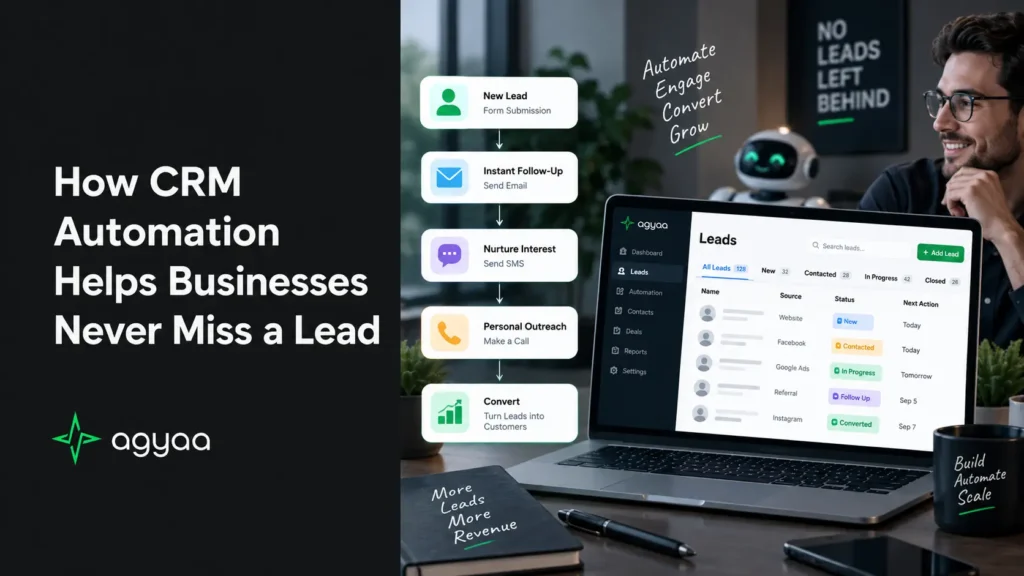
In today’s hyper-connected, fast-paced business environment, modern revenue generation is governed by a simple, unforgiving reality: speed to lead dictates conversion. Modern buyers expect immediate answers, customized interactions, and instant gratification across every channel. Whether B2B decision-makers are evaluating complex enterprise software or direct consumers are shopping for real estate, waiting even thirty minutes to follow up on an inquiry can be the difference between closing a lucrative contract and losing the client to a responsive competitor.
Yet, despite investing thousands—or millions—of dollars in digital marketing campaigns, pay-per-click ads, search engine optimization, and trade shows, companies routinely watch high-intent prospective buyers slip through the cracks. Inquiries get stranded in unmonitored shared email inboxes, lost on sticky notes, buried in sprawling spreadsheets, or abandoned because sales representatives are overloaded with manual administrative overhead.
Enter Customer Relationship Management (CRM) Automation. CRM automation transforms your client database from a passive, digital filing cabinet into an active, intelligent operational engine. By leveraging automated workflows, artificial intelligence routing, behavior-triggered interactions, and multi-channel synchronization, businesses build a leak-proof revenue funnel. Below is a comprehensive breakdown of how CRM automation enables organizations to capture, nurture, and convert every single prospective lead without missing a beat.
Key Industry Benchmarks
- 391% Higher Conversion Rate: Achieved when inbound prospects are contacted within 1 minute of inquiry submission.
- 78% of Buyers: Purchase from the vendor that responds to their inquiry first.
- 71% of Unfollowed Leads: Are permanently lost due to manual pipeline lag and delayed administrative handoffs.
1. The High Cost of the “Leaky Pipeline”
Before examining how automation remedies sales drop-offs, it is essential to understand why traditional, manual sales processes systematically fail prospective buyers. The primary vulnerability in any manual pipeline is human dependency coupled with fragmented communication channels.
When an organization relies on manual lead entry, several systemic breakdowns inevitably occur:
- Delayed Response Times: Industry benchmarks indicate that responding to an inbound lead within 5 minutes increases conversion odds by nearly 9x compared to responding in 30 minutes. Manual processes rarely support 5-minute SLAs.
- Channel Fragmentation: Leads arrive from web forms, live chat widgets, LinkedIn InMail, phone calls, WhatsApp, and events. Without central aggregation, sales representatives must jump between platforms, causing critical messages to be overlooked.
- Inconsistent Lead Distribution: Assigning leads manually leads to unequal distribution, cherry-picking, or assigning hot prospects to reps who are out sick, on vacation, or fully booked.
- Lack of Nurturing Continuity: Up to 50% of inbound prospects are interested but not ready to buy immediately. In manual workflows, reps prioritize quick closes, leaving cool-to-warm leads completely forgotten.
2. Instant Multi-Channel Lead Capture: Eliminating Friction at the Source
The first fundamental pillar of CRM automation is zero-latency multi-channel ingestion. Prospective buyers interact with brands across dozens of touchpoints. CRM automation acts as an omnipresent central intelligence hub, instantly pulling prospect metadata from every inbound source directly into a single contact view.
Automated API integrations, Webhooks, and native platform connectors ensure that the exact moment a prospect fills out a Facebook Lead Ad, submits a custom demo form on your site, or scans a badge at an industry conference, their profile is immediately created within the CRM.
Operational Rule: If a lead has to wait for a human being to manually copy and paste their contact details into a system before an outreach occurs, that lead is already at risk of walking away.
By capturing metadata such as original source, referrer URL, campaign ID, industry, company size, and specific page visit history alongside basic contact details, CRM automation enriches contact cards automatically. This guarantees that no lead is lost in an inbox or misfiled in a desktop document.
3. Automated Response Systems: Winning the “Speed-to-Lead” Race
Speed to lead is no longer a competitive advantage—it is a baseline requirement. CRM automation enables businesses to establish instant engagement workflows that operate 24 hours a day, 7 days a week, 365 days a year.
When a prospect submits an inquiry outside business hours, automated systems step in seamlessly:
- Contextual Auto-Responders: Rather than sending generic “We received your message” confirmation emails, CRM automation sends dynamic, context-aware communications. If a prospect requests a whitepaper on security compliance, the system delivers the asset within seconds while referencing their industry.
- Instant SMS and WhatsApp Dispatch: In sectors like real estate, home services, and SaaS, SMS engagement boasts open rates exceeding 90%. CRM automation can trigger an immediate text message asking a quick qualifying question.
- Automated Self-Scheduling: High-intent buyers want to book time directly with experts. Embedded CRM scheduling links allow buyers to select a calendar slot instantly, locking in a meeting without frustrating back-and-forth email exchanges.
4. Intelligent Lead Routing and Assignment
Capturing a lead quickly is useless if that lead sits unassigned in a general database repository. Automated CRM workflows remove human bias and manual delay through customized distribution algorithms.
| Routing Methodology | How It Works | Primary Business Benefit |
| Round-Robin Assignment | Distributes incoming leads sequentially among active reps. | Ensures balanced workload distribution across the entire sales team. |
| Geographic / Territory Routing | Matches lead country/postal code with regional specialists. | Ensures compliance with regional market nuances and time zones. |
| Account-Based (ABM) Matching | Identifies existing accounts and routes leads to dedicated Account Executives. | Maintains relationship continuity and prevents conflicting sales outreach. |
| Skill & Vertical Based | Routes leads to reps specializing in specific industries (e.g., Healthcare, Tech). | Increases win rates by placing buyers with deep domain experts immediately. |
Furthermore, advanced CRMs include availability-aware routing. If a sales representative is marked “Out of Office” on their calendar or has reached maximum daily capacity, the system automatically redirects incoming leads to the next available rep.
5. Dynamic Lead Scoring: Prioritizing High-Intent Buyers
Not all leads carry equal commercial value. A student downloading an educational infographic requires a vastly different approach than a VP of Procurement visiting your enterprise pricing page three times in one afternoon.
CRM automation uses dynamic, behavioral lead scoring to evaluate contact value based on two distinct vectors:
Explicit Data (Demographics & Firmographics)
Assigns points based on job title, company size, annual revenue, industry, and target market fit. For instance, an executive with a decision-maker title gains +25 points, while non-target industry profiles are decremented.
Implicit Data (Behavioral Engagement)
Monitors prospect digital body language across web properties and emails:
- Fills out demo request form: +50 points
- Visits pricing page multiple times: +20 points
- Opens promotional email: +5 points
- Unsubscribes or remains inactive for 30 days: -15 points
When a prospect’s cumulative score breaches a pre-defined threshold (e.g., 100 points), the CRM marks the prospect as a Marketing Qualified Lead (MQL) or Sales Qualified Lead (SQL). It then triggers an urgent task notification, Slack/Teams alert, or direct phone queue push to the assigned account executive.
6. Automated Nurturing Sequences: Leaving No Cold Lead Behind
In any given prospect pool, only about 5% to 15% of leads are prepared to purchase immediately. The remaining 85%+ are either conducting preliminary research, waiting on budget approvals, or evaluating alternatives over multi-month buying cycles.
Manual sales forces naturally focus on the top 10% immediate opportunities, abandoning long-term prospects. Automated drip campaigns prevent these valuable opportunities from fading away by maintaining personalized engagement over weeks or months.
Automated nurturing sequences deliver tailored content journeys based on user attributes:
- Educational Onboarding: Delivering bite-sized blog posts, case studies, and explainer videos to establish authority.
- Re-engagement Triggers: If a dormant lead re-visits your website after six months of silence, the CRM alerts the rep instantly: “Lead Prospect X is currently viewing the enterprise pricing page.”
- Social Proof Escalation: Sending industry-specific customer testimonials when a lead reaches specific evaluation milestones.
7. Task Management and Fail-Safe SLA Escalations
Human oversight is inevitable, but human error can be mitigated. Even with the best intentions, sales representatives forget to make follow-up calls, miss calendar tasks, or get bogged down in internal meetings. CRM automation provides robust fail-safes through automated Service Level Agreement (SLA) monitoring.
Example SLA Workflow: If a high-priority inbound lead is assigned to a sales representative and no activity (call, email, note) is logged within 15 minutes, the CRM automatically escalates the lead to the sales manager or reassigns it to an active colleague.
Additionally, CRMs generate automated daily task queues for sales reps. Reps no longer waste time determining who to call; they open their dashboard to a pre-prioritized list of high-value actions, follow-up calls, and contract renewals automatically queued by the system.
8. Multi-Channel Integration: Meeting Leads Where They Live
Modern communication is multi-modal. Prospective leads do not rely solely on email. CRM automation orchestrates synchronized outreach campaigns across multiple touchpoints:
- Unified Email & Voice (VoIP): Automatically log call attempts, record voice notes, and trigger follow-up confirmation emails immediately after calls wrap up.
- Instant Messaging Apps (WhatsApp, SMS): Trigger automated appointment reminders, shipping updates, or quick conversational queries via official API messaging channels.
- Social Selling Workflows: Integrate with LinkedIn and social channels to sync messaging activity directly into contact timelines.
This cross-channel visibility guarantees that every team member who views a record sees the complete, unified history of every single buyer touchpoint.
9. Real-Time Analytics and Pipeline Visibility
You cannot fix pipeline leaks that you cannot see. CRM automation yields rich operational analytics, providing executive leadership with full visibility into pipeline health and rep performance.
Automated CRM analytics engines track key pipeline health indicators:
- Lead-to-Opportunity Conversion Rate: Measures how effectively raw inquiries are converted into qualified opportunities across various lead sources.
- Average Response Time by Representative: Pinpoints coaching opportunities and highlights top-performing reps.
- Funnel Drop-off Points: Highlights exact deal stages where prospects stall, enabling targeted process refinements.
- Attribution Modeling: Accurately tracks which marketing channels produce the highest lifetime value (LTV) customers, ensuring optimal ad spend allocation.
10. Implementation Roadmap: Building Your Zero-Leakage Revenue Engine
To successfully implement CRM automation and ensure zero leads are missed, organizations should follow a structured four-stage rollout:
- Map the Complete Lead Lifecycle: Document every entry point, buying stage, qualifying criteria, and handoff between marketing and sales teams.
- Clean and Centralize Data Sources: Audit current inbound channels (forms, phone numbers, ads) to ensure clean API connections to the central CRM platform.
- Build Core Automated Workflows: Implement foundational workflows first: immediate lead capture, automated auto-responders, basic round-robin routing, and SLA escalation rules.
- Refine with Dynamic Scoring & Nurturing: Layer on sophisticated behavioral scoring, advanced multi-channel nurture drips, and predictive analytics as your operational maturity grows.
Conclusion: Operationalizing Growth with CRM Automation
In modern sales and marketing, leads are far too expensive to lose to disorganization, delayed responses, or administrative oversights. Relying on manual workflows in a high-velocity market is a recipe for lost market share.
CRM automation is not merely about saving time or eliminating repetitive administrative tasks—it is an indispensable operational discipline. By automating lead capture, intelligent routing, behavioral scoring, multi-channel response, and fail-safe follow-ups, businesses create a seamless, non-stop engine that engages buyers at peak interest levels. The result is simple: lower acquisition costs, higher conversion rates, increased sales rep efficiency, and a business model designed to never miss a lead again.